
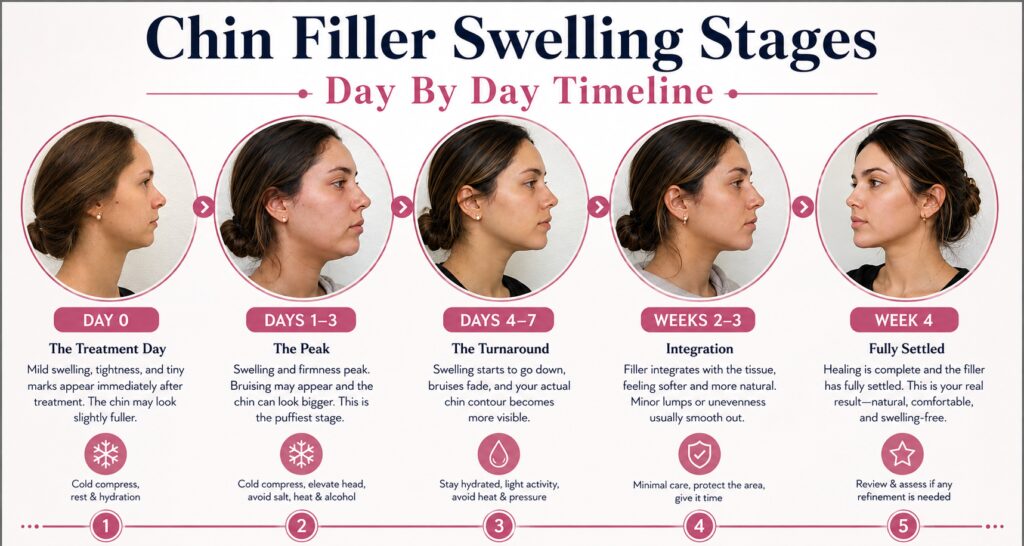
Chin Filler Swelling Stages From Day 0 to Weeks 4
| Stage | What is happening | How it feels |
|---|---|---|
| Day 0 (treatment day) | Filler placed, needle trauma begins, tissue starts to react | Full, tight, tiny marks, mild redness |
| Days 1 to 3 | Inflammation peaks, fluid gathers, bruising may surface | Puffiest and firmest stage, chin looks bigger |
| Days 4 to 7 | Inflammation calms, fluid reabsorbs, contour emerges | Softening, marks fade, tightness eases |
| Weeks 2 to 3 | Filler integrates and binds with tissue, asymmetry evens out | Natural, settled, comfortable |
| Week 4 | Healing complete, filler fully set | Final result, no swelling |
Chin filler swelling is a normal part of healing. It appears within hours, peaks around days two to three, eases sharply through the first week, and fully settles by about four weeks. The puffy look in the first few days is not your result. The one thing every guide should stress is knowing normal swelling, which improves daily, apart from warning signs like severe pain or pale, dusky skin, which need urgent care.
Most chin filler recovery guides are written by the clinic that performed the treatment, and they tend to skim over the part people actually worry about: what each day really feels like, and when swelling is a problem rather than just healing. Chin Contour is independent, we do not run a clinic and we do not sell injections, so this guide walks through every stage in depth, what is happening under the skin, how to manage it, and exactly when to call a professional.
Day 0: The treatment day
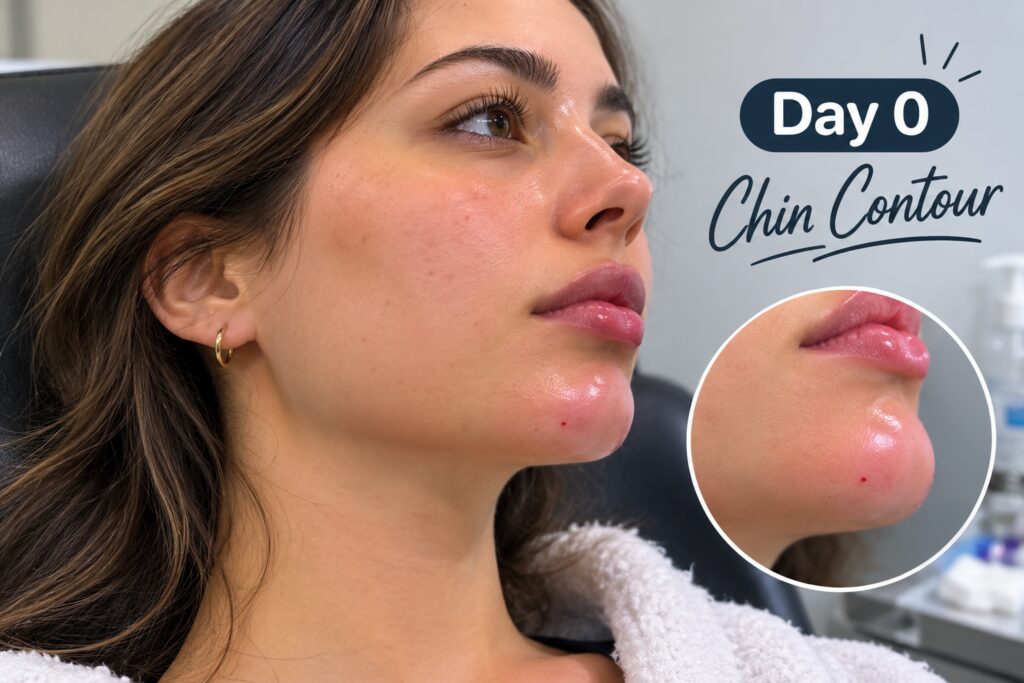
What is happening: The moment your filler is placed, two things begin at once. The fine needle or cannula creates tiny channels in the skin and tissue, and your body immediately sends fluid and healing cells to those points. At the same time, the hyaluronic acid gel starts drawing in water, because attracting moisture is exactly what hyaluronic acid does. Together, this is why the chin can feel full and tight within the first few hours.
How it feels and looks: You will see your new projection straight away, though it may look slightly exaggerated. Expect mild puffiness, small pinpoint marks, a little redness, and a firm or tight sensation. This is all expected and not a cause for concern.
How to manage and prevent it getting worse: Start a cold compress wrapped in a soft cloth for fifteen to twenty minutes at a time, never ice directly on skin. Keep your head elevated, drink plenty of water, and leave the area completely alone. Do not press, rub, or check it in the mirror by poking at it. If you planned ahead, avoiding alcohol, aspirin, fish oil, and vitamin E in the days before treatment will already be reducing how much you swell and bruise now.
When it eases: Day 0 swelling is just the beginning and will build slightly before it improves, which is normal.
Days 1 to 3: The peak
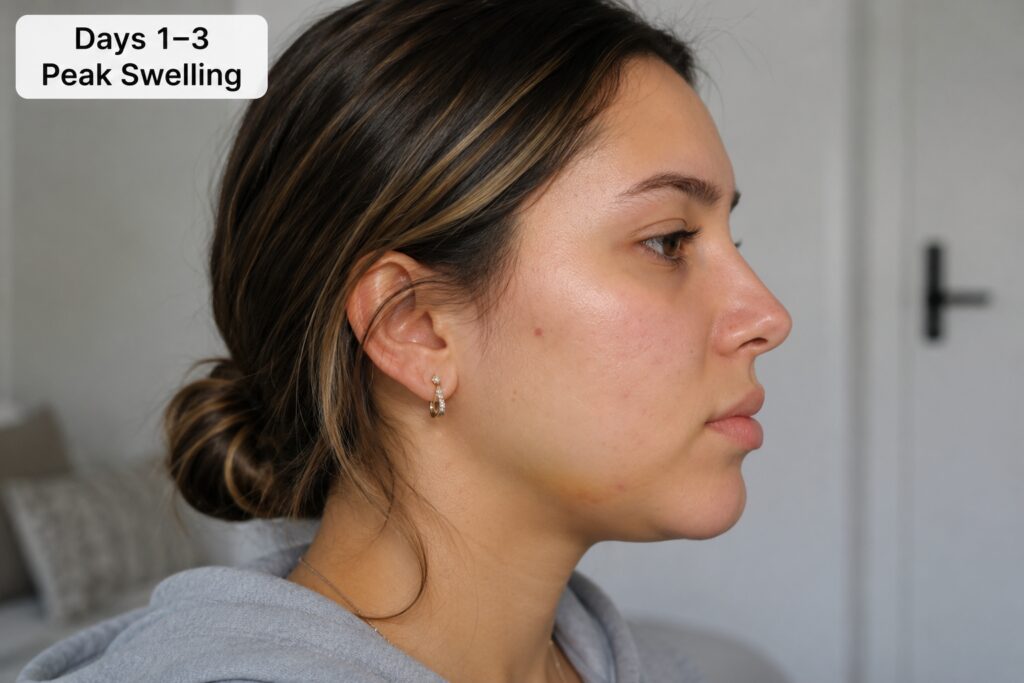
What is happening: This is when inflammation reaches its high point. Your immune system is fully engaged in healing the injection sites, fluid has gathered in the area, and the hyaluronic acid is still holding water at maximum. Any bruising that is going to appear usually surfaces during this window, as blood from tiny disturbed vessels rises to the surface.
How it feels and looks: This is the puffiest and firmest your chin will look and feel. It can appear noticeably bigger than your final result, which surprises a lot of first timers. It may feel tender and tight, but it should not be truly painful. Slight unevenness between the two sides is common and temporary.
How to manage it: Keep using cold compresses through day two, then switch to gentle warmth from day three if bruising has appeared, which helps the body clear it. Continue sleeping on your back with your head raised, keep avoiding alcohol, salt, spicy food, heat, and exercise, and keep your hands off the area. Arnica gel or tablets can help bruising fade faster.
When it eases: Peak swelling almost always begins to turn the corner after seventy two hours. If it is still clearly worsening past that point, that is your cue to pay closer attention, which we cover in the warning signs section below.
Days 4 to 7: The turnaround
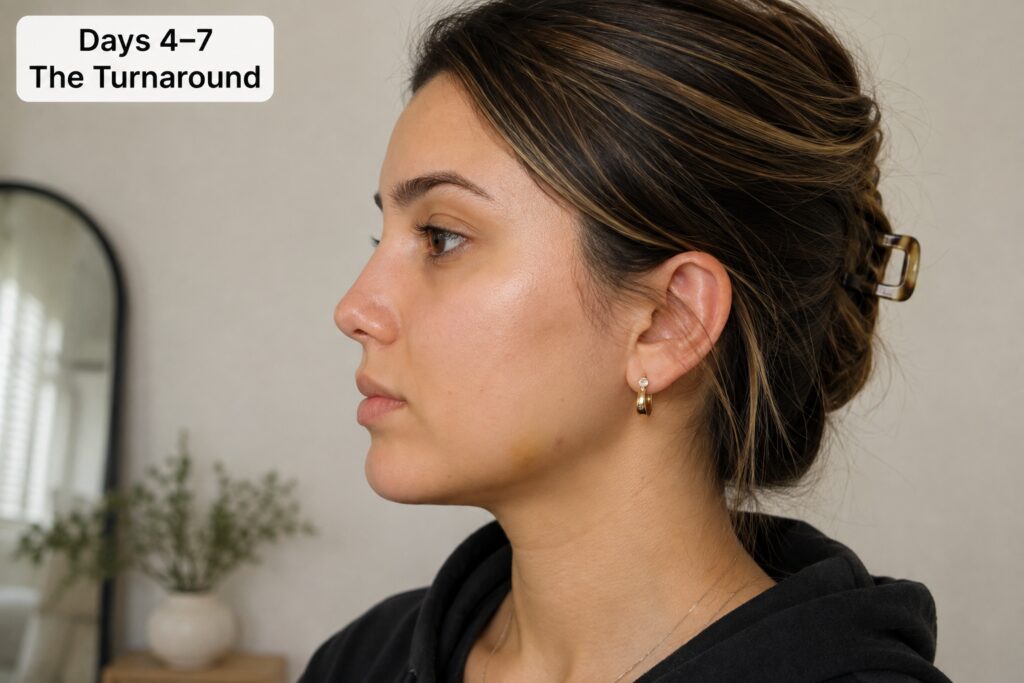
What is happening: Inflammation is now calming, and your body begins reabsorbing the excess fluid. The hyaluronic acid settles into a more stable state and stops holding as much water, so the exaggerated fullness recedes and your actual contour starts to show through.
How it feels and looks: Swelling drops noticeably day by day. The tiny injection marks fade, bruises lighten and shift colour as they heal, and the tight feeling loosens. By the end of the first week, most people feel comfortable and look close to their intended shape.
How to manage it: You can gradually return to light normal activity, but keep avoiding heavy exercise, saunas, and hot showers until swelling is fully gone. Stay hydrated, and continue not massaging or pressing the chin so the filler settles evenly.
When it eases: By day seven, the bulk of visible swelling, redness, and bruising has usually resolved.
Weeks 2 to 3: Integration
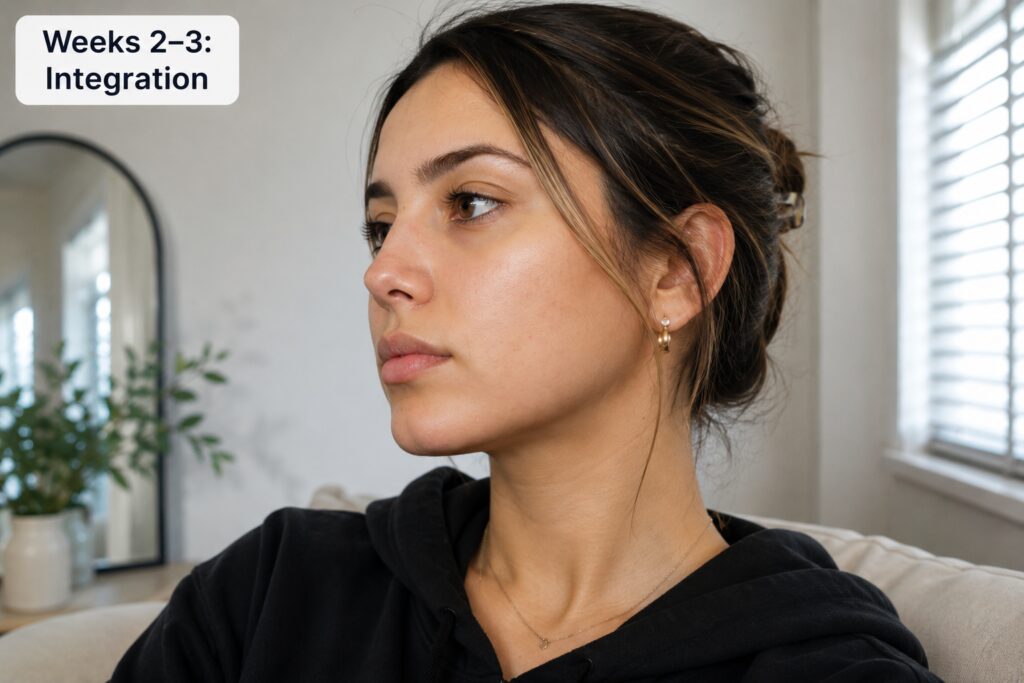
What is happening: Now the filler physically integrates with the surrounding tissue, binding into place rather than sitting as a separate pocket of gel. This is the stage where the result becomes genuinely stable.
How it feels and looks: The chin softens to a natural feel, and any minor lumpiness, firmness, or asymmetry from the early days tends to even out on its own as the filler distributes. What you see now is very close to your true, finished result.
How to manage it: Very little is required at this point. Live normally, protect the area from unnecessary pressure, and if you notice a small firm spot, give it time, as most self resolve during this window.
When it eases: Residual swelling is minimal to gone. Only in cases with more product or easy bruising will faint puffiness linger toward the end of this period.
Week 4: Fully settled
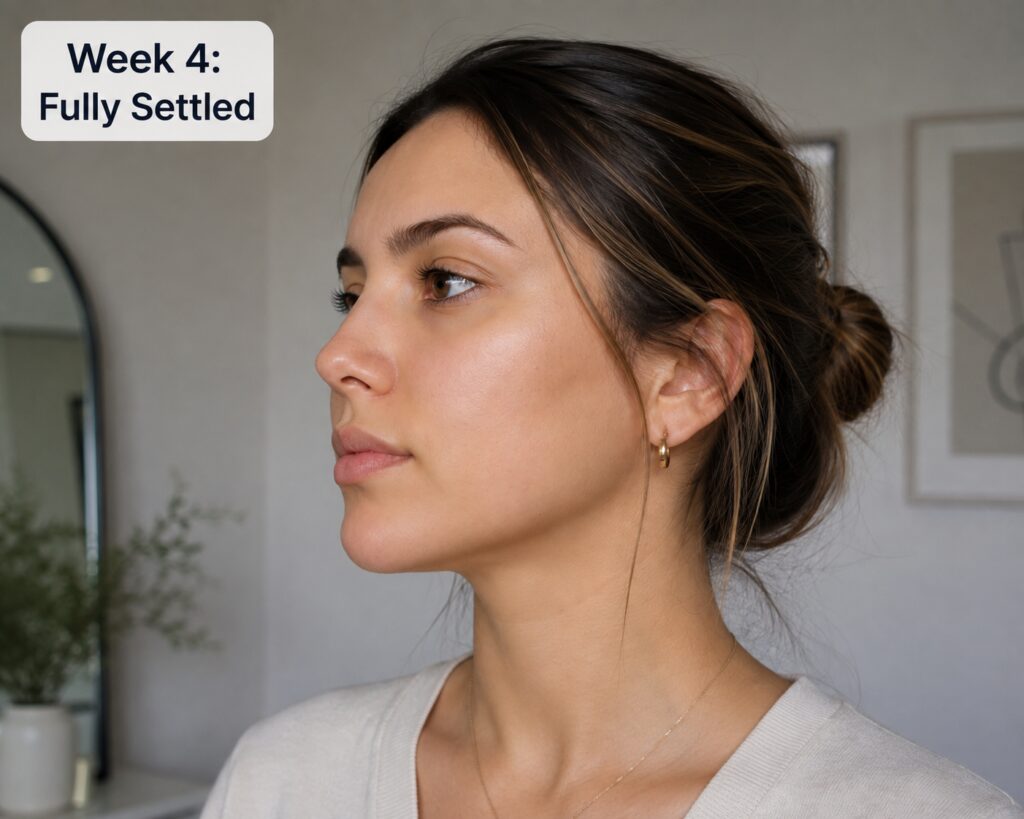
What is happening: Healing is essentially complete, and the filler has fully set into its final position and shape.
How it feels and looks: This is your real result, natural, comfortable, and swelling free. The chin looks and feels like your own.
How to manage it: This is the right time for a review appointment. If you want a small refinement or a top up, a reputable injector will assess and adjust now, never during the swollen early weeks.
When it eases: Complete. If any swelling genuinely remains at four weeks, it should be checked by your provider.
How long does chin filler swelling last overall?
Pulling the timeline together, noticeable swelling lasts about two to seven days, peaking at days two to three. Bruising fades within five to ten days. Light residual swelling occasionally lingers up to two to four weeks, more often when more product was used or you bruise easily. Beyond two weeks of significant swelling, check in with your provider rather than waiting.
Normal swelling versus when to worry
This is the most important section on this page, and the part most clinic guides underplay. Almost all chin filler swelling is normal and fades on its own. But a few symptoms can signal a serious complication, and with fillers, speed matters.
This is normal and expected:
- Mild to moderate swelling that improves a little each day
- Small red marks or mild soreness at the injection points
- Minor bruising that fades within five to ten days
- A tight, firm, or heavy feeling in the chin
- Slight unevenness that settles over the first two weeks
Contact a medical professional urgently if you notice:
- Severe or worsening pain not relieved by ordinary pain relief, or pain out of proportion to the treatment
- Skin that turns white, pale, blotchy, blue, grey, or develops a mottled, lace like pattern
- Swelling that gets worse rather than better after the first forty eight hours
- Spreading redness, warmth or heat, or a fever or chills
- Blistering or dark patches on the skin
- Vision changes, or difficulty swallowing, breathing, or speaking
The most serious of these can indicate a vascular occlusion, where filler blocks a blood vessel. It is rare, but it is a time sensitive emergency, and the signs usually appear within the first twelve to twenty four hours. The reassuring part is that hyaluronic acid filler can be dissolved quickly with an enzyme called hyaluronidase, which is also used for persistent lumps. If anything feels wrong, do not wait it out, contact your injector or seek medical care immediately.
When will I see my final chin filler result?
Because swelling distorts the early days, your true result is not what you see at first. Most people fully settle at around two weeks and finalise by four weeks once the filler integrates. This is exactly why reputable injectors book a review at three to four weeks rather than adjusting sooner. To see what a settled result looks like, read our guide to chin filler before and after, and if you are still weighing the treatment up, our guide to how much chin filler costs breaks down the full picture.
Frequently asked questions
How long does chin filler stay swollen?
Noticeable swelling usually lasts two to seven days and peaks around days two to three. Light residual swelling can occasionally last up to two to four weeks, but the chin is generally settled by then.
Is it normal for chin filler to look bigger at first?
Yes. In the first few days, swelling plus the water attracting nature of hyaluronic acid can make the chin look fuller or exaggerated. This is temporary and not your final result.
When does chin filler swelling peak?
Swelling is usually at its worst in the first forty eight to seventy two hours, then improves steadily from day four.
How can I get chin filler swelling to go down faster?
Use a cold compress in the first day or two, stay hydrated, keep your head elevated, sleep on your back, and avoid alcohol, salt, heat, strenuous exercise, and touching the area.
When should I worry about chin filler swelling?
Seek medical help urgently if you have severe or worsening pain, skin that turns pale, blue, grey, or mottled, swelling that worsens after forty eight hours, spreading redness or fever, or any vision or swallowing changes.
How long until chin filler looks normal?
Most swelling settles within a week, and the filler looks natural and fully settled at around two to four weeks.
Resources and references
- Dermal Fillers (Soft Tissue Fillers) — U.S. Food and Drug Administration (FDA) — official FDA information on dermal fillers, their approved uses, and the warning signs of serious complications.
This article is for education only and is not medical advice. Individual healing varies. Chin Contour is independent and not affiliated with any clinic. If you have any concern about your recovery, always contact a qualified, medically trained provider.

Harper Hayes is the founder and lead researcher behind Chin Contour, an independent resource for chin and jawline treatment information. She is not a doctor or clinic owner and has no ties to the aesthetics industry, so her only focus is giving readers unbiased, easy to understand answers. Harper spends her time studying clinical research, trusted expert sources, and real patient experiences, then translating it all into plain language, helping you make confident, well informed decisions about chin contouring, fillers, and double chin treatments.