

Chin filler adds projection and definition to the chin using an injectable gel. You see a change immediately, but the true before and after settles at around two weeks, once the swelling fades. Most first timers need one to two syringes. Hyaluronic acid fillers last roughly 6 to 18 months and can be dissolved if you dislike the result. One thing every honest guide should say up front: filler reshapes and projects the chin, it does not remove fat, so on its own it is not a fix for a fat based double chin.
Search “chin filler before and after” and you get a wall of glossy clinic galleries. Beautiful photos, very little context, and almost always a book now button attached. This guide is different. Chin Contour is independent, we do not run a clinic and we do not sell treatments, so our only job here is to show you what results actually look like, how long they take, what they cost you in swelling and money, and when filler is the wrong tool for the job.
What a chin filler before and after actually shows
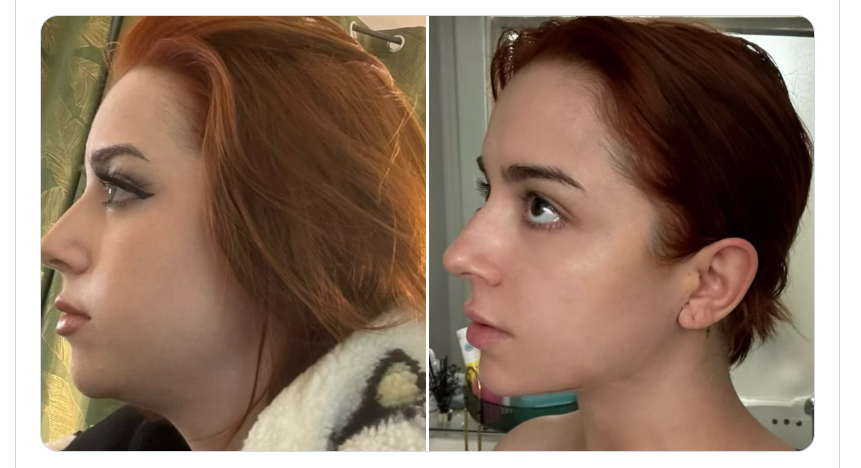
In a good result, the change is usually more subtle than people expect, and it shows up most clearly from the side. Chin filler adds volume to the tip and body of the chin, which pushes it slightly forward and down. That single change does a lot of quiet work: it strengthens a weak or recessed chin, brings the profile into better balance with the nose and lips, and gives the jawline a more defined starting point.
The most dramatic difference is almost always in the side profile, not the straight on selfie. A chin that used to slope back toward the neck now has a clearer point, and the soft area under the chin looks tighter simply because the angle has changed.
The realistic timeline, day by day
This is where a lot of before and after photos quietly mislead people. The photo labelled after is sometimes taken on the same day, when the chin is still swollen and looks fuller than the final result. Here is what actually happens.
- Day 0 (treatment day): You see projection instantly. There may be mild swelling, tenderness, redness at the injection points, and sometimes a small bruise. The chin can look slightly over full right now. That is normal.
- 24 to 48 hours: Swelling and tenderness usually peak, then start to ease. Any bruising is most visible here and fades over several days.
- Days 3 to 7: Most of the swelling settles. The shape starts to look natural rather than puffy.
- Around 2 weeks: The filler has integrated and softened into its final position. This is your true before and after. Judge the result now, not on day one.
- 2 to 4 weeks: A follow up is common. If a little more definition is wanted, a small top up is added here rather than overfilling on the first day.
How many syringes will you need?
Chin filler is measured in syringes, and one syringe holds one millilitre, which is roughly a fifth of a teaspoon. It sounds tiny, and it is, but the chin is a small area where a little goes a long way. Most first timers use one to two syringes, and surveys of injectors put the average for a chin alone at under two.
| Amount | Typical result | Who it suits |
|---|---|---|
| 1 syringe | Subtle projection, a natural refinement of the profile | Mild recession, first timers who want a soft change |
| 2 syringes | Clearer projection and a more defined chin and jaw transition | Moderate recession, or balancing chin with early jawline shaping |
| 3 or more | Significant reshaping, usually chin plus jawline together | Larger structural change, typically built over more than one session |
A quick word of caution, because clinic marketing rarely says it: more is not better. Overfilling a chin can create a heavy, pointed, or unnatural look that reads as done. A skilled injector often prefers to start conservatively and add later, which is exactly why the two week follow up exists.
Will chin filler fix a double chin?
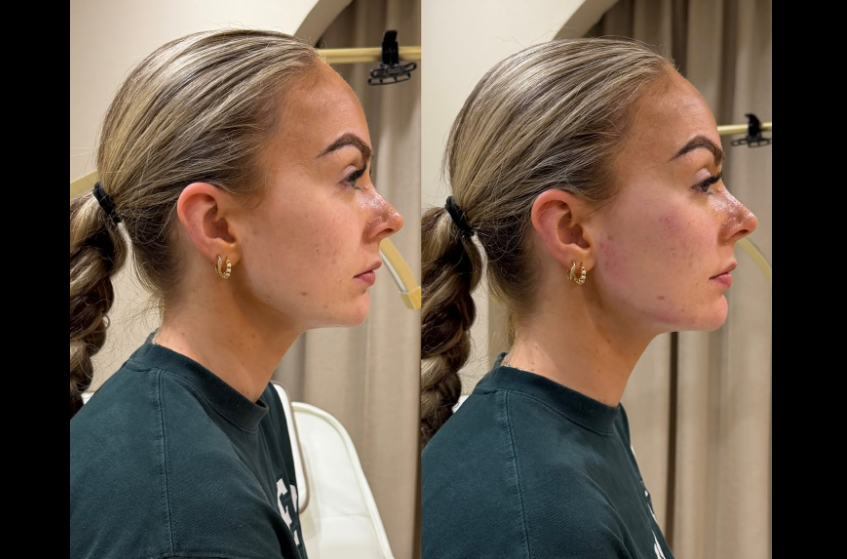
The honest answer: usually not on its own. This is the single most common misunderstanding, so it is worth being blunt. A double chin and a weak chin are two different problems with two different fixes.
A recessed or weak chin is about projection, how far the chin comes forward. Filler is genuinely good at that. A double chin, on the other hand, is usually about fat, a soft pad sitting under the chin and jaw. Filler adds volume, it does not dissolve or remove fat. It cannot make that fat pad disappear.
There is a nuance worth knowing. By pushing the chin forward, filler can sharpen the angle between the chin and neck, which sometimes makes a mild double chin look a little better. But if the fullness under your chin is mainly fat, filler is the wrong tool and you will be disappointed. For a fat based double chin, the honest options are fat reduction treatments such as Kybella, which is an injection that dissolves fat, or chin liposuction, which removes it surgically.
We cover both so you can compare properly: read our Kybella before and after guide for the injectable route, and see Chin Lipo for how surgical fat removal actually works, recovers, and costs.
How to read before and after photos without being fooled
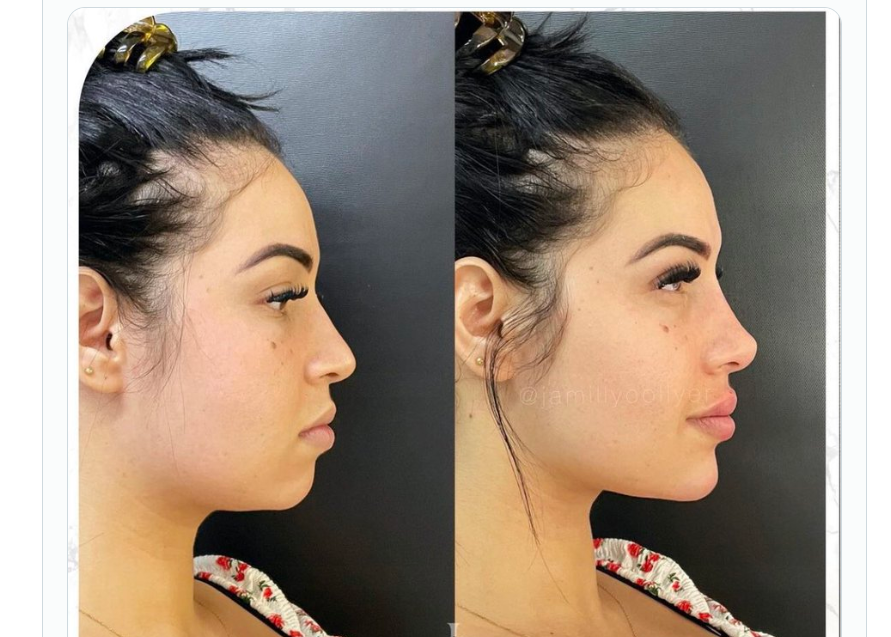
Once you know what to look for, most dramatic before and after photos become a lot less impressive. A change in the photo does not always mean a change in the chin. Watch for these:
- Lighting: Harsh overhead light carves out shadows and fakes definition. Soft, flat light does the opposite. If the two photos are lit differently, the comparison is meaningless.
- Head angle and tilt: Tilting the chin down and forward instantly creates a stronger jawline in any photo, filler or not. Trustworthy comparisons keep the head in the exact same position.
- Timing: An after shot taken while the chin is still swollen looks fuller than the real, settled result.
- Lens and distance: A close phone selfie distorts the face. A step back and a longer lens flatter it.
- Makeup and contour: A little shading under the jaw does much of what people credit to the filler.
The rule of thumb: only trust before and after photos shot in identical lighting, at the same angle, and taken at least two weeks apart.
Honest downsides and risks
Filler is popular because it is quick and low commitment, but it is still a medical treatment. The realistic downsides:
- Swelling, bruising and tenderness for a few days, occasionally longer.
- It is temporary. The result fades over months, so keeping it means repeat treatments and repeat cost. Over a few years, that adds up.
- Overfilling can look unnatural. This is a judgement and technique issue, not a product issue.
- Migration, where product moves from where it was placed, is uncommon in the chin but more likely with overfilling or poor placement.
- Lumps or nodules can form and usually settle or can be treated.
- Rare but serious: a blood vessel can be blocked by filler, called a vascular occlusion. It is uncommon, but it is the main reason to choose an experienced, medically trained injector rather than the cheapest option.
When chin filler is not the right choice
- Your under chin fullness is mainly fat. Look at fat reduction instead.
- You want a permanent solution and do not want to repeat treatments. A chin implant is worth researching.
- You need a large structural change. Beyond a certain point, surgery gives a more stable, natural result than stacking syringes.
- You are pregnant or breastfeeding, have an active skin infection near the area, or a relevant medical condition. Defer and speak to a qualified provider.
How long it lasts, and is it reversible?
Most chin filler uses hyaluronic acid, a gel your body slowly breaks down. In the chin, which moves less than the lips, results tend to sit on the longer end, roughly 6 to 18 months depending on the product and your metabolism. Firmer options such as calcium based fillers can last longer and also stimulate some collagen, though they are not reversible. One hyaluronic acid product, Juvederm Voluma, is FDA approved specifically for chin augmentation and can last up to around two years.
The reassuring part: hyaluronic acid filler can be dissolved. If you dislike the result or it migrates, an injection of an enzyme called hyaluronidase breaks it down within a day or two. That safety net is a real advantage over permanent options.
Frequently asked questions
Does chin filler hurt?
Most people describe it as very tolerable. A numbing cream is usually applied first, and most fillers contain a local anaesthetic. You feel pressure and small pinches rather than sharp pain.
How long does chin filler last?
Roughly 6 to 18 months for hyaluronic acid in the chin, sometimes up to about two years for longer lasting products, before a top up is needed to maintain the result.
Can chin filler be dissolved if I do not like it?
Yes, if it is hyaluronic acid. An injection of hyaluronidase dissolves it within a day or two. This is not possible with permanent or calcium based fillers.
Will chin filler get rid of my double chin?
Not on its own if the fullness is fat. Filler adds projection and can improve the angle, but it does not remove fat. For a fat based double chin, look at fat reduction options such as Kybella or chin liposuction.
Is chin filler better than a chin implant?
They solve the same problem differently. Filler is temporary, reversible, and needs no surgery, which makes it a low risk way to test a stronger chin. An implant is permanent and better suited to a large, lasting change. Many people try filler first before committing to an implant.
This article is for education only and is not medical advice. Chin Contour is independent and not affiliated with any clinic. Individual results, risks, and suitability vary, so always consult a qualified, medically trained provider before any treatment.
Resources and references
- Dermal Fillers (Soft Tissue Fillers) — U.S. Food and Drug Administration (FDA) — the official FDA page covering approved uses of dermal fillers, including chin augmentation, along with risks and patient safety guidance.
- Clinical Overview of Dermal Fillers — U.S. Food and Drug Administration (FDA) — an FDA document explaining how soft tissue fillers are used and regulated.

Harper Hayes is the founder and lead researcher behind Chin Contour, an independent resource for chin and jawline treatment information. She is not a doctor or clinic owner and has no ties to the aesthetics industry, so her only focus is giving readers unbiased, easy to understand answers. Harper spends her time studying clinical research, trusted expert sources, and real patient experiences, then translating it all into plain language, helping you make confident, well informed decisions about chin contouring, fillers, and double chin treatments.